Okay, it’s 1936. An Austrian engineer creates an invention that nobody wants. It was rejected by dozens of companies, even the British government. His invention seemed pretty useless. Today, that same idea is inside every smartphone, computer, and car in the world. Billions of boards are produced each year, supporting a $75 billion industry. And without it, there would be no internet, no smartphones, no modern computers. Its creator was a Jewish refugee who lost everything during World War II, but whose useless invention ended up kind of changing the world.
Paul Eisler and the Invention of the PCB:
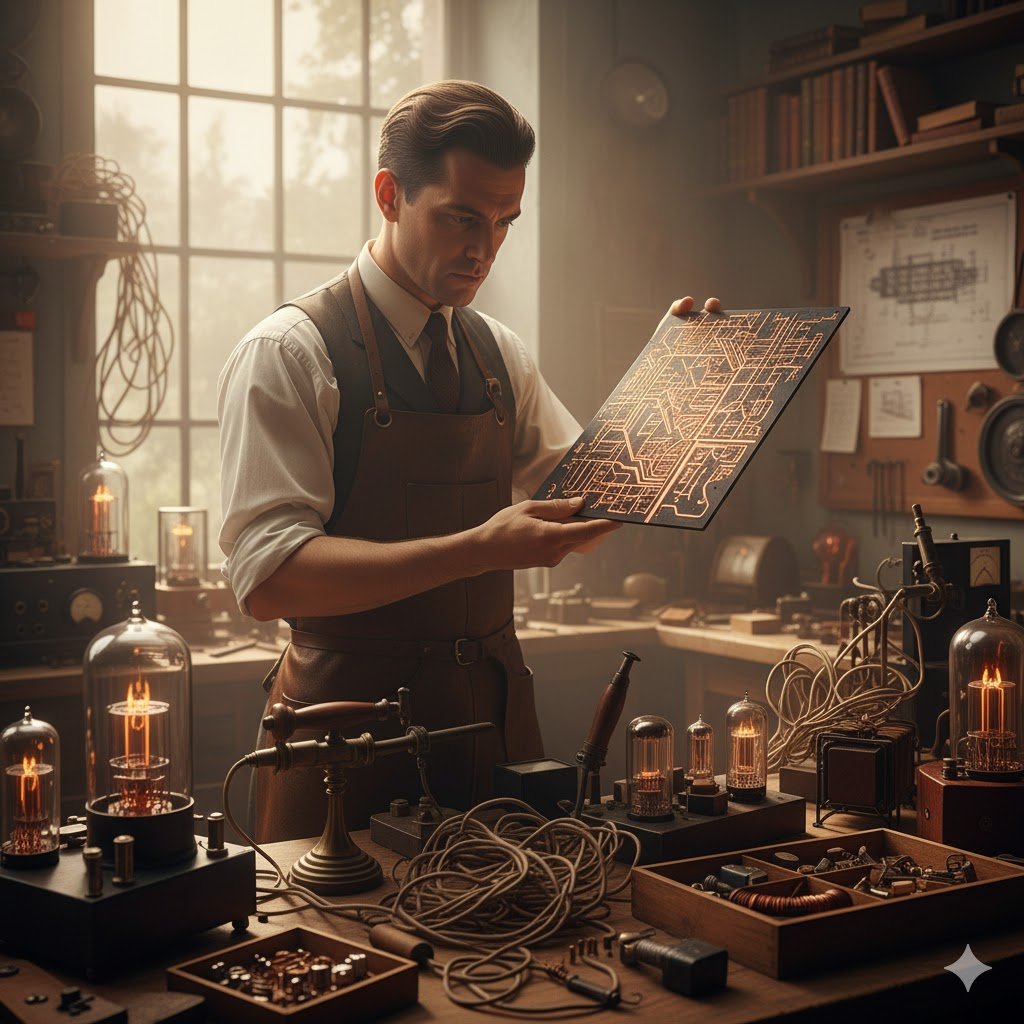
Paul Eisler was not your typical engineer. While working in Vienna in 1936, he had a somewhat unusual obsession, cables. At that time, building any electronic device was incredibly tricky. A simple radio required 300 manually soldered wires. A computer needed thousands of wires connected one by one. The most skilled technicians would take weeks to assemble a single device. One misconnected wire and everything would fail. Mistakes were frequent, and costs were extremely high.
In fact, they went up with every error. Eisler saw the same problem everyone else did. Yet, he came up with a unique, almost unimaginable idea.
The Idea:
Paul’s idea was to try to print the wires like a photograph. What? Each trace on the board would be an electrical pathway, a copper road connecting resistors, transistors, chips, and any other component, etc., etc. Imagine a microscopic road map engraved on a flat surface. Each road is a perfect wire.
He called this invention the printed circuit board. For months, he worked in his Vienna workshop trying to bring his idea to life. Finally, he produced a somewhat functional prototype. But there was a problem. To put it into context, World War II was about to begin, and Eisel was Jewish. He decided to flee Austria, leaving everything behind, and moved to London.
Rejection, Refuge, and War:

Eisel went door-to-door, presenting his invention to company after company, but the answer was always the same. No. Even the British government rejected the idea. Another problem was that specialized technicians felt threatened. Decades of expertise would become obsolete if the board did its job. A bit like what some workers feel today with AI. In an industry where every process had been refined for years, ISIS’s idea seemed more like a problem than a solution.
War Intervention:
But everything changed during the war. The bombings of London began, and British generals faced a devastating problem. Communication. Their military radios were a disaster. They weighed about 30 kilos and required two soldiers to carry them. Worst of all, it was enough for a single wire to loosen. Something that happened constantly, by the way, for the entire device to fail. Directing troops became a major challenge.
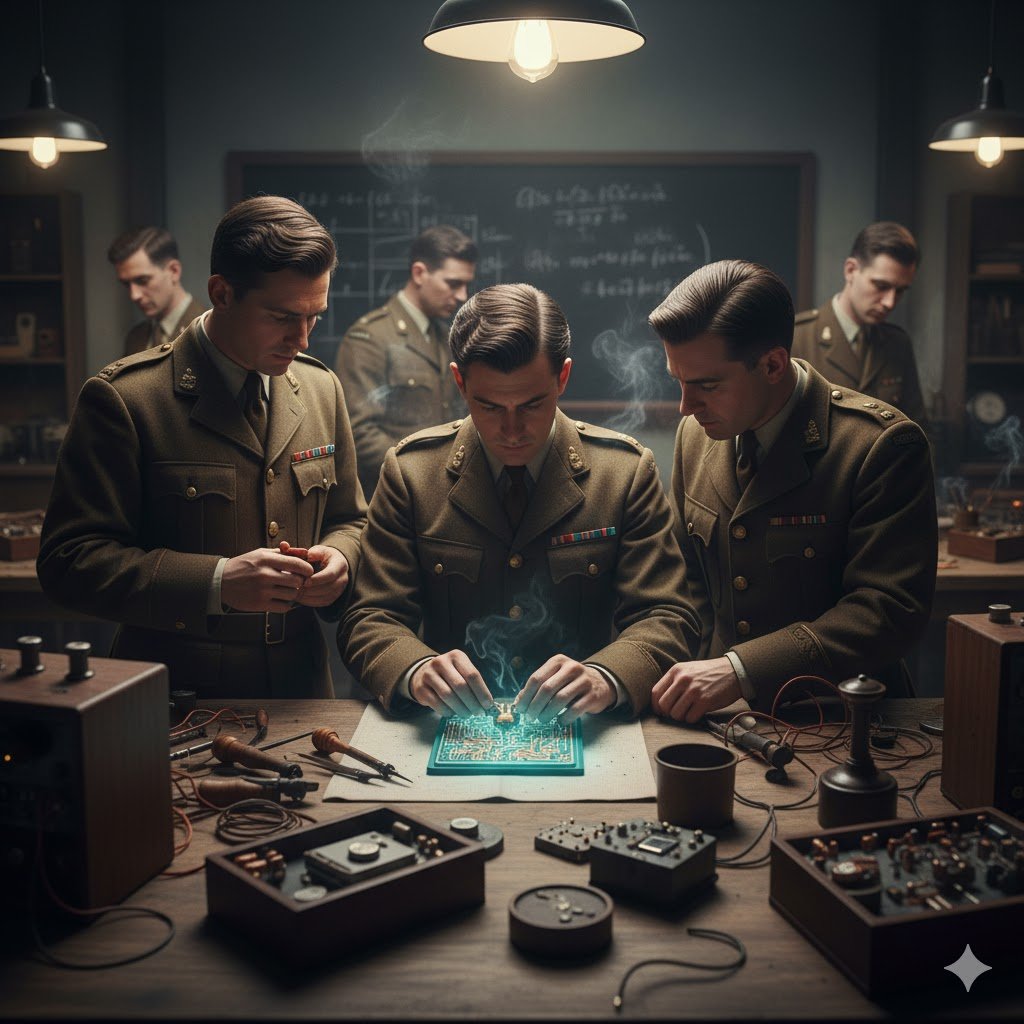
There was always some failure, always a communication problem at the worst possible time. In England, engineers were hired to try to solve the problem. They tested all kinds of inventions, and nothing worked until January 1941. A group of military officers reached out to Paul, desperate for a solution. Paul was working in a factory in East London. Soldiering components. The military offered him resources as long as he could guarantee that the device would work. They gave him a team of engineers and a lab where they could refine his invention and turn it into a truly useful product.
The Military Breakthrough:
The result was absolutely revolutionary. In 1942, the first radio receiver built with printed circuit boards in history was produced. It was much smaller and presumably far less prone to problems. The real turning point, though, came in 1943 when the Americans adopted the technology and began producing it on a large scale. The US faced an enormous challenge. The demand for communication equipment had exploded beyond what any industry could handle. Every tank, airplane, and ship needed reliable radios. Traditional methods ain’t going to keep up. When American engineers saw the printed circuit boards, they immediately understood their potential.
Not only were they smaller and lighter, but they could also be mass-produced. A factory that once assembled 50 radios a month could now produce thousands just like that.
Strategic Advantage:
Microwave radar appeared in 1943, relying entirely on precise, compact circuits. Without Eisler PCBs, this technology would have been impossible to manufacture at scale. The useless invention had become a strategic advantage during the war.
The Foundation of the Digital World:
Once the war had ended in 1945, the British government declassified PCB technology. For the first time in history, civilian manufacturers could access the innovation that had changed the war. Civilian radio manufacturers quickly discovered they could produce devices that were smaller, cheaper, and far more reliable at lightning speed.
The Computer Age:
In 1951, the UNIVAC arrived, the first commercial computer in the US. It weighed 13 tons and filled an entire room. But here’s the incredible part. Univac used printed circuit boards. The very same tech Isa had invented in his small Vienna workshop was now powering the most advanced machines on the planet. Without PCBs, these giant computers would have been impossible.
Miniaturization:
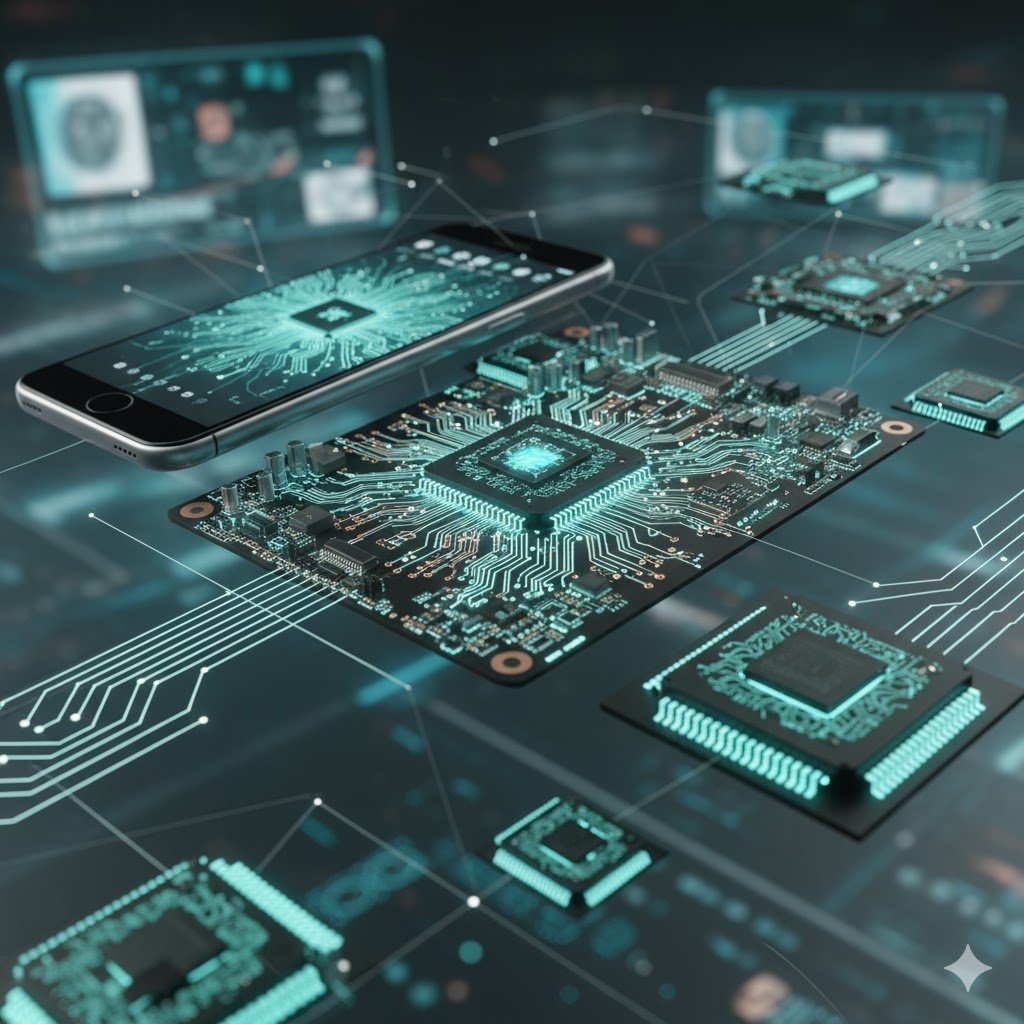
In the 60s, integrated circuits mounted on PCBs appeared. A single board could now do the work of thousands of components. Computers that once filled entire buildings could now fit on your desk. In 1971, Intel, a name you might recognize, created the first microprocessor, a tiny chip that fits on your fingertip. And that was the beginning of everything.
Modern Electronics:
By the mid-70s, Steve Jobs and Steve Wnjak founded Apple, a company built on the same PCB tech invented 40 years earlier. Computers were no longer massive monsters filling entire rooms. They became machines that anyone could have at home. IBM released its PC in 1981. Commodore launched the 64 in 1982. Every single one of these machines worked the same way: a motherboard connecting everything.
By the 1980s, PCBs had evolved into 20-layer boards stacked on top of each other. Imagine a 20-story building, but the thickness of a credit card with nearly microscopic pathways running inside. In the 1990s, the internet exploded. Every connected computer required increasingly complex PCPs. Without these boards, you couldn’t even send an email.
Current Scale:
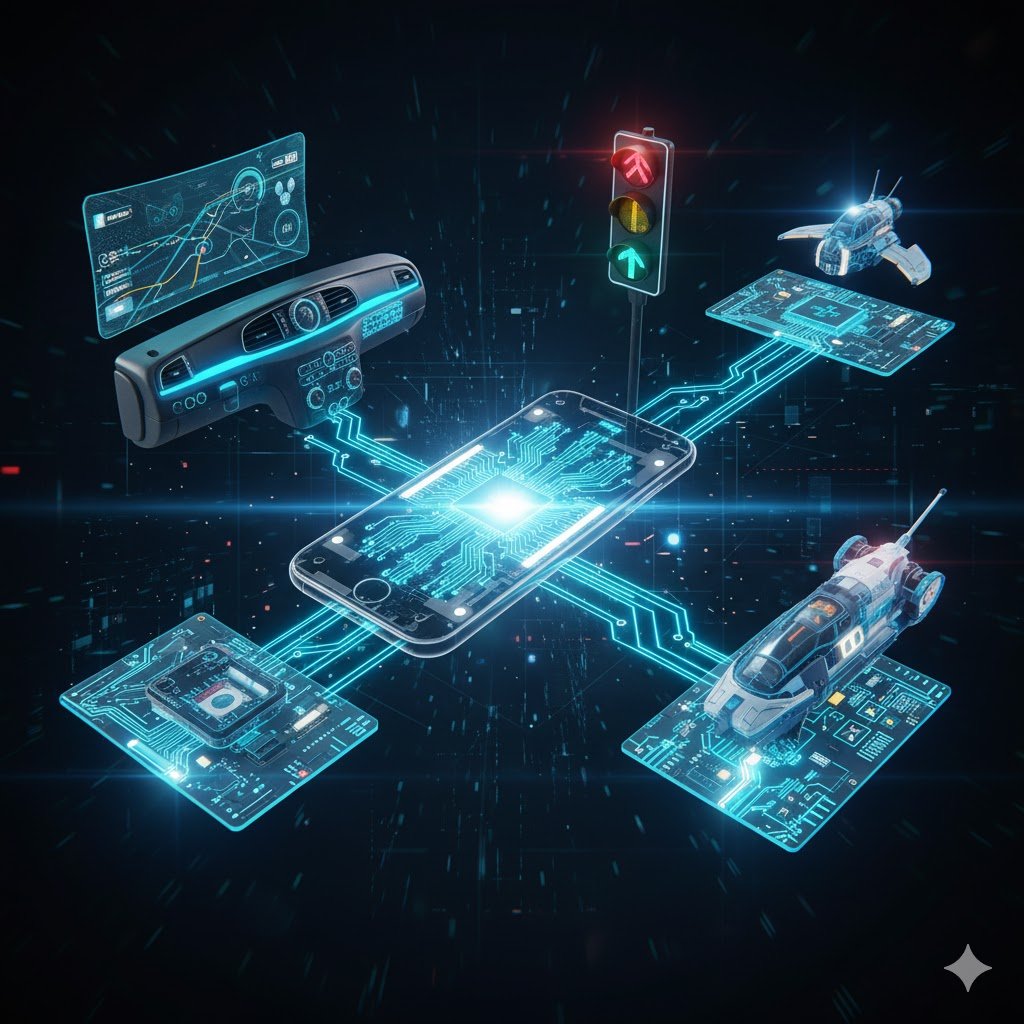
Your modern smartphone contains 15 different boards. The numbers today are staggering. 700 billion PCBs are produced each year. More than 100 per person on the planet. Your phone, 15 boards. Your car, over 150. They’re in traffic lights, pacemakers, and even in space.
The Apollo 11 spacecraft carried, you guessed it, PCBs. Every time you Google something, it travels through millions of these boards. Every Netflix video is processed on servers packed with PCBs. Even when you turn on a light, there’s a PCB controlling the electricity.
Without the Eisler PCB, there would be no digital revolution, no internet, no smartphones, no modern computers at all.
The Austrian refugee everyone rejected ended up changing the world forever. It’s mind-blowing to imagine. If Paul hadn’t managed to leave Austria and had been captured by the Nazis, you probably wouldn’t be reading this blog. But hey, who knows?
Conclusion
From rejection to revolution, Paul Eisler’s printed circuit board turned a forgotten idea into the backbone of modern life. Every click, call, and connection we make today traces back to his invention. What started as one man’s desperate experiment became the invisible foundation of the digital world, a reminder that even the smallest ideas can change everything.
FAQs:
1. Who invented the PCB?
Paul Eisler, an Austrian engineer, invented it in 1936.
2. Why was the PCB important?
It replaced messy wiring with compact, reliable circuit paths.
3. When was the first PCB used in war?
In 1942, during World War II, military radios were used.
4. How did PCBs change computers?
They made computers smaller, faster, and cheaper to build.
5. How many PCBs are made today?
Around 700 billion are produced every year.
6. Where are PCBs used now?
In phones, cars, computers, medical devices, and even spacecraft.