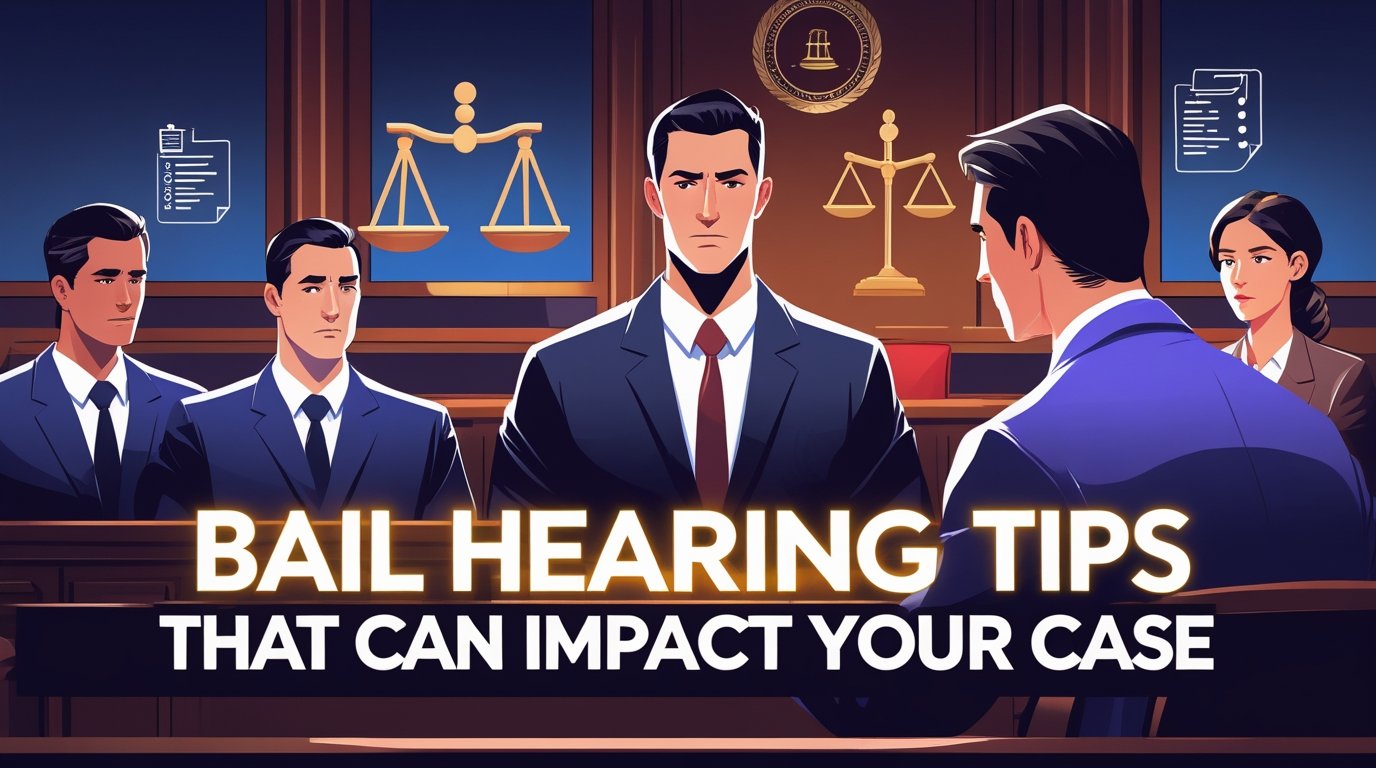
I helped a close family member go through the terrifying bail hearing. It felt like five minutes could determine their freedom.
The judge isn’t looking at guilt; they’re assessing risk. Everything you do in that short hearing, how you look, who speaks for you, and how you prepare, impacts whether you walk out or stay locked up.
This is the simple, real-world advice we compiled to successfully show the judge that the risk was low. Let’s start with your presentation.
1. Why Appearance and Respect Matter More Than You Think:
When you walk into that bail hearing, you are not being judged on the charges themselves. You are being judged on whether you are trustworthy enough to show up to your next hearing. The judge has never met you, and they need to make a snap decision.
I quickly realized that the way you look and behave is the first, fastest, and most important tip the judge uses to decide if you are a “flight risk” or a “danger.” It’s a high-stakes interview where first impressions are everything.
The Dress Code:
This seems simple, but it is constantly overlooked. If the person is coming from jail, they are often wearing whatever clothes they were arrested in, or a uniform. But if there is any chance to influence this, you must treat the hearing like the most important job interview of your life.
- The Goal: You want to look clean, stable, and respectful. You are demonstrating to the judge that you take the legal process seriously.
- What Worked: We made sure the family member wore clean, neat, simple clothing. No slogans, no loud colors, no ripped jeans, and certainly no baseball caps. A simple collared shirt (even an inexpensive one) is a thousand times better than a t-shirt. For women, a simple blouse and pants or a modest dress shows the necessary level of seriousness.
- The Reason Why: The judge sees people who disrespect the court all day. If you look like you don’t care, the judge will assume you won’t care enough to show up to your next court date. Showing respect for the room, the process, and the court’s authority is the easiest way to earn the judge’s respect in return.
The Body Language:
The courtroom is a silent, formal place, and your body language speaks volumes before you ever say a word. I instructed my family member to practice this ahead of time, which felt ridiculous but was crucial.
- Stand Still and Quiet: When the judge calls your name, stand up straight. Do not slump, fidget, cross your arms (which can look defensive or hostile), or sway. Being still and calm projects stability and control, the exact opposite of someone panicking or planning to run.
- Eye Contact with Respect: Look at the judge when they speak to you, but not aggressively. A respectful nod shows you are listening.
- The Power of ‘Yes, Your Honor’: If the judge or lawyer asks you a question, your answer must be simple, clear, and formal. “Yes, Your Honor” or “No, Your Honor.” Never give long explanations, jokes, or emotional outbursts. This shows you are controlled, compliant, and understand the seriousness of the proceedings. Anything extra can be interpreted as a problem or risk.
The Support System in the Seats:
Another powerful, non-verbal signal is the presence of your family and friends.
When the judge looks out at the gallery and sees four or five neat, worried, supportive faces sitting there, they get a strong, immediate message: “This person has strong community ties, and a lot of people care about whether they come home.”
- Don’t Bring Chaos: While having support is great, instruct supporters to dress conservatively and be absolutely silent. The judge must see a display of organized, respectable stability, not emotional chaos.
- The Message Sent: The mere sight of a strong support system suggests to the judge that there are people who will actively monitor the defendant and ensure they meet their next court date, further reducing the perceived risk.
By focusing purely on presentation, the respect shown in your clothes, the stillness in your body, and the clarity of your simple answers, you immediately position yourself as a low-risk candidate. This is the foundation upon which you build your formal case for freedom.
2. Showing the Judge Your ‘Flight Risk’ is Zero:
After the judge assesses your presentation (Section 1), they move on to the first major legal question: Are you a Flight Risk?
This is the central question of the entire bail hearing. The judge’s job is not to decide if you are guilty; it’s to decide if you are reliable enough to be trusted back into the community, knowing you will return for all your court dates. If they think you might hop on a bus or a plane and disappear, they have to keep you in jail.
We learned that fighting the “Flight Risk” label means demonstrating stability and strong, immovable ties to the community. You have to prove to the judge that running away is not only against your character, but also financially and logistically impossible.
The Three Pillars of Stability:
For the judge, stability is everything. You need to show that if you were released, you have a solid place to live, a reason to get up in the morning, and people who rely on you. We focused on getting documentation for these three pillars ready:
1. The Residence Anchor:
A stable home address is the number one sign of stability. If you are sleeping on a different couch every week, the judge sees you as having no anchor, making it easy to leave town.
- The Goal: Show that you have a committed, long-term residence.
- What Worked: We provided the lawyer with a copy of the lease or mortgage statement showing the person’s name and address. If they live with family, a simple, notarized letter from the homeowner stating, “Name of defendant is welcome to live here indefinitely,” is very powerful.
- The Judge’s View: A judge looks at a lease and thinks, “This person has property and a financial obligation here. They won’t risk losing it by running.”
2. The Employment Anchor:
Having a job or being enrolled in school is another major tie. It proves you have a routine, obligations, and an income source that will stop if you leave.
- The Goal: Show a stable employment history or a full-time school schedule.
- What Worked: We brought a letter from the employer (on company letterhead) stating the employee’s start date, current title, and that the job is being held for them if they are released. Pay stubs showing continuous employment are also great evidence.
- The Judge’s View: If the person has a solid job or is invested in finishing a degree, they have too much to lose to run away.
3. The Financial Anchor:
This shows the judge that your assets are traceable and local, not hidden in cash under a mattress.
- The Goal: Show you have a local bank account and are not planning a sudden financial exit.
- What Worked: Provide a recent bank statement showing a typical balance. This seems invasive, but it shows local, traceable financial ties.
- The Judge’s View: If the person has an established local checking account, it proves they aren’t liquidating everything into hard-to-trace cash, a classic sign of someone planning to flee.
Avoiding the Negative Signals:
Just as important as providing positive evidence is making sure you don’t inadvertently send negative signals to the court.
- The Passport Trap: If you have a valid passport, the court often requires you to surrender it immediately as a condition of release. If the lawyer can proactively offer the passport in the hearing, it shows cooperation and reduces the “flight” risk. An expired passport is great proof that you haven’t been preparing to leave the country.
- The ‘Stranger’ Bail: If the bail money is being paid by someone who isn’t a family member or close friend, the judge might suspect the money is coming from illicit sources or from people helping facilitate a flight. Having a clear connection between the person posting bail and the defendant is vital.
By laying out this documentation, prepared ahead of time by the family support system, the lawyer can quickly and efficiently paint a picture of stability, transforming the person from a potential flight risk into a low-risk, responsible member of the community.
3. Letters of Support That Speak Louder Than Words:
The judge has checked your address and your job (Section 2), but now they need to know the emotional impact of keeping you in jail. This is where the concept of Community Ties comes in.
Community ties simply mean: Do you have roots? Do you have people in your life, beyond your immediate family, who depend on you, trust you, and will notice if you disappear?
In the sterile, logical environment of a courtroom, these ties, usually demonstrated through Letters of Support, are the powerful human element that can swing a judge’s decision. We found that these letters don’t argue legal points; they argue character and reliability.
The Power of the Support Letter:
The judge receives stacks of paperwork every day. A well-written letter from a respected member of the community is a breath of fresh air. It provides the judge with a reason to believe in the person’s character, which is essential because the judge needs an internal reason to take the risk of releasing them.
What the letters must do:
- State the Relationship: The letter must clearly state who the writer is (e.g., “I have been John Doe’s employer for 15 years”) and their professional credentials (e.g., “I am the Pastor of First Baptist Church”).
- Affirm Character: They must speak to the person’s good character, honesty, and reliability. They shouldn’t talk about the current charge (the writer doesn’t know the facts); they should talk about the defendant’s lifetime behavior.
- Vouch for Appearance: The most critical part! The writer must state that they believe the defendant is a responsible person who will not flee and will appear at all future court dates. Some will even say, “I am willing to personally encourage them to appear.”
Avoiding the Pitfalls:
The biggest mistake a support letter can make is trying to argue the case.
- DO NOT say, “He couldn’t have done it because he’s a good person.” That is the jury’s job.
- DO say, “He is a reliable person who takes his commitments seriously, and I guarantee he will show up for his next court date.”
The judge needs simple, clean evidence that releasing the person won’t pose a risk to the court’s calendar. Letters of support provide that powerful social proof and are often the element that tips the scales, especially in close cases where the flight risk and danger factors are ambiguous. They show the person is anchored not just by property, but by people.
4. Convincing the Judge You Are Not a Danger to Anyone:
If you pass the first two tests, proving you won’t run away (Flight Risk) and proving you have strong local roots (Community Ties), you face the final, highest hurdle: Are you a Danger to the Community?
This is the judge’s scariest factor. If a judge releases someone who goes out that afternoon and commits a serious crime or harasses a victim, that judge will be held publicly responsible. They are focused on two major fears:
- Public Safety: Will you commit a new crime while out on bail?
- Witness/Victim Safety: Will you intimidate or harm anyone connected to the current case?
You must convince the judge that you are not just a low flight risk, but a zero public safety risk. This is achieved by offering a Safety Pledge, a sincere willingness to accept conditions that restrict your freedom.
Restrictions:
In my experience, the biggest breakthrough came when our lawyer stopped fighting all restrictions and started offering restrictive conditions proactively. This is the trade-off: you get your freedom back, but you accept that the court needs to monitor you closely.
The willingness to accept conditions is the strongest evidence you can provide that you take the situation seriously and respect the court’s authority.
Here are the specific, powerful conditions we focused on being ready to accept:
1. The Curfew Contract:
A simple promise to be home every night between specific hours (e.g., 8:00 PM and 6:00 AM) is extremely powerful.
- Why it Works: It limits the opportunity to commit a new crime, as most crimes happen late at night. It also proves you have a stable residence and a schedule you are willing to follow.
- Our Tip: If the person works late, the lawyer must present the work schedule and offer a revised curfew that works with their job, showing the person is trying to be responsible.
2. The Electronic Promise (Ankle Monitoring):
If the charge is serious, the judge will worry about monitoring. An electronic monitoring device (often called an ankle bracelet) is expensive and intrusive, but it’s often the key to freedom in high-risk cases.
- Why it Works: It eliminates the flight risk and the public safety risk by proving where the person is 24/7. It shows the judge, “I have nothing to hide, and I am willing to pay for constant supervision.”
- Our Tip: Have the financial plan to pay for the monitoring already worked out. Offering the cost and agreeing to the intrusion proactively is a strong signal of commitment.
3. Protection Orders and Counseling:
If the charge involves a victim, the judge’s priority is their safety.
- Why it Works: Offering to sign a Restraining Order or No-Contact Order immediately, without arguing, proves you will keep your distance. Additionally, offering to enroll in mandatory counseling, drug treatment, or anger management classes shows the judge that you are proactively working to fix the underlying issue that may have led to the charge.
- Our Tip: The lawyer should present the name of the counselor or program you have already contacted. Pre-emptive action shows deep commitment, not just empty promises.
The Final Verbal Pledge:
The judge will look directly at the defendant and ask if they understand and agree to the conditions. This is the moment to reinforce the positive impression from Section 1.
The answer must be clear, simple, and respectful: “Yes, Your Honor, I understand and agree to those conditions.”
By offering these restrictive conditions, you help the judge clear their conscience. You are telling them, “I understand your fear, and I am willing to be supervised and restricted so that you can trust me to be home.” The safety pledge is often the final key that unlocks the jail door.
5. Understanding Bail Types and How to Pay It Fast:
We’ve covered the three risks the judge assesses: flight, community ties, and danger. If the judge decides you are a low risk, the moment of truth arrives: the judge sets the price for your freedom (Bail).
This is where the support system outside the courtroom is absolutely critical. It doesn’t matter how low the bail is; if the money isn’t ready, the person stays in jail. I learned that having a financial plan ready before the hearing is almost as important as the hearing itself.
The Different Prices of Freedom:
Bail is essentially a financial guarantee that you will show up to court. If you show up to all your hearings, the money is typically returned.
The judge has three main ways to set that price:
1. Personal Recognizance (P.R. Bond):
- The Easiest: This is the best outcome. The judge believes you are so low-risk that your word is enough. You sign a piece of paper promising to appear, and you walk out immediately. No money is required up front.
- The Catch: If you fail to appear, you owe the full amount set by the court.
2. Cash or Surety Bond (The Money Deposit):
This is the most common and often the most confusing type of bail. The judge sets a specific dollar amount (e.g., $\$10,000$).
- Cash Bail: You (or your family) pay the full $\$10,000$ to the court. If the person attends every single court date, the entire $\$10,000$ is returned to the person who posted it. This is the best option if the family has the full amount.
- Surety/Bail Bondsman: If you don’t have the full amount, you pay a Bail Bondsman a non-refundable fee (usually 10% of the bail amount). For a $\$10,000$ bail, you pay the bondsman $\$1,000$ that you never get back. The bondsman then puts up the full $\$10,000$ with the court. They charge this fee because they are taking the financial risk that the defendant might run.
3. Property Bond:
This is rare, but if the bail is extremely high, the judge might allow a property owner to pledge their property (like a house) as collateral instead of cash. If the defendant runs, the court can seize and sell the property.
The Importance of the Ready Plan:
Why is the plan so important? Because the hearing often happens instantly. If the judge says, “Bail is set at $\$5,000$,” and the family has to spend the next 24 hours desperately trying to get money, the person stays in jail.
- The Bondsman Connection: If you anticipate bail will be set, contact a few bail bonds agencies beforehand. Ask them their non-refundable fee percentage and what kind of collateral they might need (like a house deed or a car title). Having their contact information ready to go allows the family to act instantly once the dollar amount is announced.
- Know Your Cash: If the family can afford the full cash amount, they should know exactly where that money is and how fast they can get it to the courthouse.
The reality is harsh: bail isn’t about guilt; it’s about money and risk. By understanding these options and having the funds or the bondsman relationship ready, the support system ensures the decision for freedom can be acted upon immediately.
6. The Power of Silence and Letting Your Lawyer Do the Talking:
This is the shortest, simplest, and most crucial tip I can give anyone facing a bail hearing: Do Not Talk.
The bail hearing is the first time the defendant is in front of the judge. Everything you say can be used against you later in the case.
- The Trap: When the judge asks questions, they are often trying to gauge your temperament, responsibility, and reliability. But your brain, being stressed and panicked, wants to jump in and explain everything: “I didn’t mean to do it,” or “It wasn’t my fault.” This is a massive mistake. You are volunteering information that is not helpful for bail and could harm your defense later.
- The Lawyer’s Job: Your lawyer is there to manage the flow of information and protect you. Their job is to tell the judge why you are a low risk based on the evidence (residence, job, letters). They speak the legal language the judge wants to hear.
The Silence Rule:
We instituted the strict Silence Rule:
- If the Judge Asks You a Question Directly: Answer clearly with only “Yes, Your Honor” or “No, Your Honor.” Never elaborate. Never joke. Never argue.
- If the Judge Asks the Lawyer a Question: The defendant must remain absolutely silent and still.
The only exception to this is if the lawyer signals or directs you to answer a specific factual question (e.g., “Tell the judge how long you’ve worked at the factory”).
The power of silence shows the judge that you are compliant, controlled, and respectful, the exact opposite of a flight risk or a danger. Letting your lawyer manage the narrative is the best hack to guarantee the focus stays on your stability and not on your anxiety.
Conclusion:
The bail hearing is a moment of pure stress, but you have far more control over the outcome than you realize. You can’t control the charges, but you can control your presentation, your stability documentation, your community support, and your willingness to accept restrictions. By treating the hearing as a high-stakes interview and preparing all the evidence beforehand, you successfully minimize the judge’s perceived risk. Go in prepared, be silent, and let your preparation speak for your freedom.
FAQs:
1. What is the single most important factor a judge considers?
Whether the defendant is a Flight Risk and will fail to show up for the next hearing.
2. What kind of clothing should be worn to a bail hearing?
Clean, neat, conservative clothing to show respect for the court and process.
3. What is the purpose of letters of support?
To prove that the defendant has strong ties and roots in the community that prevent them from running away.
4. What does the judge worry about when assessing “Danger to the Community”?
That the defendant will commit a new crime or harm a victim/witness while out on bail.
5. What is the biggest mistake a defendant can make when speaking?
Talking too much or trying to explain their case which can be used against them later.
6. What is the financial difference between Cash Bail and a Bail Bondsman?
Cash Bail is refundable when the case ends, while the Bondsman’s fee (usually 10%) is non-refundable.